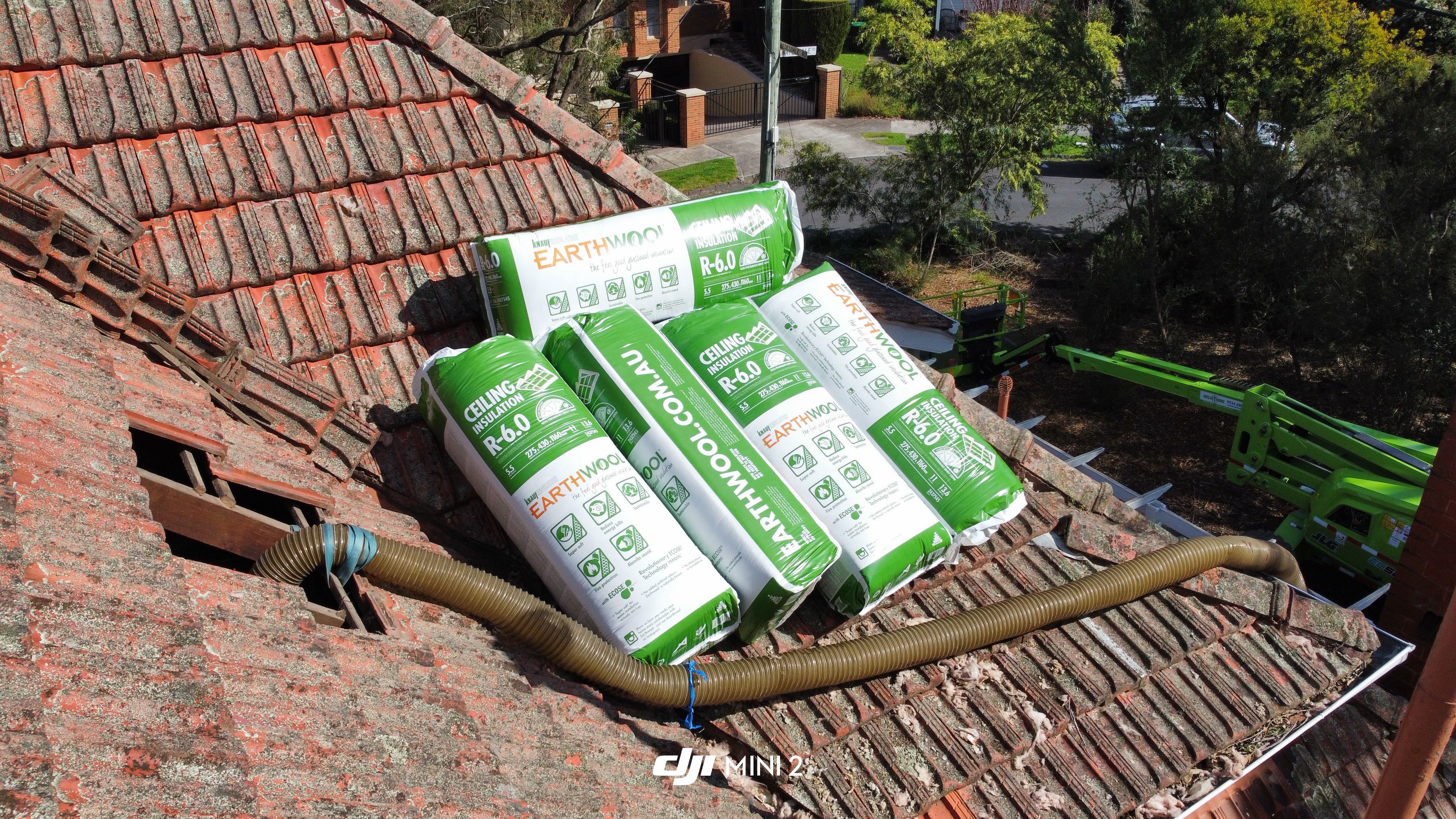
Ask ten Australian homeowners what the best upgrade for their house is and you will get ten different answers — a new split system, solar panels, double glazing, a reverse-cycle retrofit, maybe even a heat-pump hot water system. Every one of those is a reasonable spend. But one upgrade sits beneath all of them, quietly determining how much they are worth: insulation.
Not flashy. Not visible from the street. But on every metric that matters — cost per degree of comfort, payback period, emissions avoided per dollar, noise reduction, resale — a well-insulated home beats almost every other intervention you can make. This is a long read because it deserves to be. By the end, you will understand exactly why we tell every customer the same thing: insulate first, everything else later.
What insulation actually does (and why every other upgrade depends on it)
Your home is constantly exchanging heat with the outside world. In winter, the warmth your heater pumps out leaks through the ceiling, the walls, the floor, and the window frames. In summer, the opposite happens: heat pours in through the roof cavity, radiates off uninsulated walls, and turns a comfortable morning into an afternoon sauna.
Insulation is the material between you and that exchange. It works through three mechanisms:
Conduction resistance — slowing heat moving through solid materials like timber framing and plasterboard.
Convection suppression — stopping warm air from circulating inside wall and roof cavities.
Radiant reflection — reflecting infrared heat back where it came from, which is why reflective foils matter in Australian roofs.
Without insulation, your heater is trying to warm the atmosphere through a brick sieve. Add solar panels and they will dutifully power that leaky heater. Add a new heat pump and it will run efficiently — and then dump its output through the same uninsulated ceiling. Every active system in your home is only as effective as the passive shell around it.
The ROI no other renovation can match
Let us talk about money, because this is where insulation is genuinely shocking.
What it costs to run a leaky home
In Melbourne, a typical detached 1970s brick-veneer home with minimal insulation loses roughly 40% of its winter heat through the ceiling alone. Walls account for another 15–25%, windows around 10%, and the floor a further 10–20%. Those percentages are not marketing — they come directly from CSIRO and Sustainability Victoria modelling that our engineers reference every time they quote a job.
Translated into bills: a poorly-insulated 180 m² home in Melbourne commonly spends $2,000–$3,200 per year on heating and cooling. A well-insulated version of the same house spends $700–$1,100. The gap is not a rounding error. It is a holiday, every year, for the life of the building.
Payback period, honestly
A full ceiling insulation upgrade for a typical Melbourne home sits in the $1,800–$3,500 range depending on size and access. Against $1,500+ of annual savings, the payback is typically 18 to 30 months.
Compare that to:
Solar panels — 5 to 8 years payback, and only if you self-consume during daylight.
Double glazing — 15 to 25 years on a whole-house retrofit. Genuinely excellent for comfort, brutal on the wallet.
Reverse-cycle HVAC upgrade — 6 to 10 years, and that is before you factor in the running cost of heating an uninsulated home.
Nothing else pays itself back in two years. Nothing.
Comfort you can feel in every room
Spreadsheets are persuasive, but the reason customers actually rave about insulation is how it feels. Three changes happen in a properly insulated home, and they happen immediately:
Rooms stop having personalities. The front bedroom is no longer freezing while the lounge bakes. Temperature differences between rooms collapse from 6–8°C down to 1–2°C.
Mornings get civilised. Because the thermal envelope holds overnight, the house is 4–6°C warmer at 6 a.m. than it would be otherwise. You stop waking up in a cold house.
The noise drops. Good bulk insulation absorbs mid-range frequencies — road noise, neighbours, rain on a Colorbond roof. Acoustic insulation in internal walls does the same between rooms.
We renovated the kitchen three years ago. It looked great and we barely notice it now. We insulated the ceiling last winter and we notice it every single morning.
That is a near-verbatim quote from a customer in Northcote. It is also the pattern we hear over and over: visible renovations fade into the background; thermal comfort becomes the thing you cannot imagine living without.
This is the argument that tips most homeowners over. Almost every upgrade being sold to you right now has its business case quietly anchored to the insulation beneath it.
Solar and batteries
A 6.6 kW solar system generates roughly 8,500–9,500 kWh per year in Melbourne. If 40% of that goes to heating a leaky house, you are essentially renting sunshine to the atmosphere. Insulate first, and the same solar array suddenly covers far more of your real household demand.
Heat pumps and reverse-cycle air conditioning
A modern reverse-cycle unit has a Coefficient of Performance (COP) of around 4.0 — meaning 1 kWh of electricity produces 4 kWh of heat. Very efficient. But that is efficiency at the appliance, not at the room. Pump 4 kWh of heat into a ceiling that loses 2.5 kWh of it, and your effective COP collapses. Insulation is the only thing that recovers it.
Double glazing
Double glazing is excellent — if the wall around the window is insulated. A double-glazed window in an uninsulated wall just moves the leak three feet sideways. Most thermographic reports we take show walls losing more heat than the windows, because walls are larger and usually have nothing inside them.
Smart thermostats and zoning
These are brilliant tools for a house that holds temperature. In a leaky house, they are a speedometer on a car with a blown engine — precise measurement of an underlying problem they cannot solve.
Climate impact per dollar spent
If you care about emissions — and a lot of our customers do — insulation is the highest-leverage dollar you can spend. Sustainability Victoria's modelling puts ceiling insulation at roughly 3–5 tonnes of CO₂e avoided over 20 years for a typical home, at an installed cost of $2,000–$3,000. That works out to around $600–$900 per tonne of lifetime emissions avoided.
For reference:
Residential solar sits at roughly $100–$200 per tonne — better on a pure carbon-per-dollar basis, but it relies on the grid being dirty and on you actually consuming the electrons.
Replacing a gas heater with a heat pump avoids around $300–$500 per tonne — excellent, and far more excellent with insulation beneath it.
Double glazing sits at $1,200–$2,000 per tonne in typical retrofits.
Insulation is not the cheapest tonne on paper, but it is the only intervention that also slashes peak demand, makes the grid's job easier in a 42°C Melbourne summer, and cuts winter gas use without asking you to change any behaviour at all.
What 'good' insulation looks like in an Australian home
Not all insulation is equal, and this is where a lot of well-meaning DIY jobs go sideways.
R-values by climate zone
R-value measures thermal resistance — higher is better. In Climate Zone 6 (which covers most of Melbourne, Geelong and the Mornington Peninsula), the National Construction Code currently expects:
Ceilings: R6.0 minimum. R7.0 is where we target for new installs because the marginal cost is trivial.
External walls: R2.8 minimum for new construction. Retrofit into existing cavities usually reaches R2.0–R2.5.
Underfloor: R3.25 minimum for exposed floors (think elevated Queenslander-style or rear extensions on stumps).
The ceiling → walls → underfloor hierarchy
If your budget is finite — and whose isn't — spend in this order:
Ceiling first. Biggest surface, biggest leak, cheapest to upgrade. Always.
Underfloor second if you have timber floors over a subfloor or on stumps. Draughts from below are brutal and underfloor batts fix them in a day.
Walls third. More invasive and more expensive because cavities have to be accessed, but transformative for comfort — especially south-facing walls.
Double glazing and wall wraps come after all of this, not before.
Common mistakes Melbourne homeowners make
We see the same handful of problems on inspection, over and over:
Squashed batts. An R4.0 batt compressed to half its thickness becomes roughly an R2.0 batt. If there is anything sitting on your insulation — storage, old air-con ducts, cables — it is working at a fraction of its rating.
Gaps at the edges. A 5% gap in coverage can cut overall performance by 30–50%. Thermal imaging catches this instantly, which is why every Pro Insulation job ends with a thermographic check.
No vapour management. Install insulation without considering condensation and moisture pathways and you can trap damp inside your wall cavity. This is a builder-grade mistake that causes real damage.
Skipping the old stuff. Pre-2005 batts lose 20–40% of their R-value over time from settling, rodent damage, and moisture. If your insulation looks furry and flat, it is not doing what it says on the tin.
How to get started
Three steps we recommend to every homeowner, regardless of whether you end up working with us:
Get a proper thermal assessment. Not an eyeball from the hatch — an actual infrared scan on a cold morning. It shows you where heat is leaving and how much.
Ask for R-values in writing. Any quote that does not state the exact product, R-value, and coverage area is not a quote — it is a vibe. Ours always itemise this, alongside a 25-year workmanship warranty.
Sequence the rest of your home upgrades after the envelope. Insulation first, then efficient heating, then glazing, then solar. That is the order every energy engineer we respect recommends, and it is the order our crews actually work.
There are homes we have insulated that sold for $40,000–$80,000 more than comparables in the same street — not because the insulation itself is glamorous, but because the EER (Energy Efficiency Rating) on the Section 32 is now 6.5 stars instead of 3.5. Buyers pay for comfort, and appraisers increasingly price it in.
The best home upgrade is almost never the one you can photograph. It is the one you stop noticing because the house has stopped fighting you. If you are thinking about a single improvement this year, make it the one sitting invisibly in your ceiling, walls, and floor.